Pinterest and YouTube API Limits for Schedulers
YouTube no longer charges uploads out of the 10,000-unit daily pool: videos.insert and search.list each get their own bucket of 100 calls a day at 1 unit per call. Pinterest meters Trial apps per day and Standard apps per minute, and Pins made on Trial access are visible only to their creator. Developer documentation read November 3, 2026.
This article is a documentation review: it is based on the vendors' own published pages, checked on the date shown. We may earn a commission from some links; it never affects what we recommend.
The two platforms most often missing from a scheduler's plan page are Pinterest and YouTube, and the reason is in their developer docs. Both cap third-party publishing in ways that a per-plan post allowance cannot describe.
YouTube's quota page now carves video uploads out of the shared daily pool. Pinterest's rate limit page meters trial apps by the day and production apps by the minute.
Both pages were read on November 3, 2026. Figures below are quoted from the rendered pages, not from summaries of them.
YouTube gives uploads and search their own daily buckets
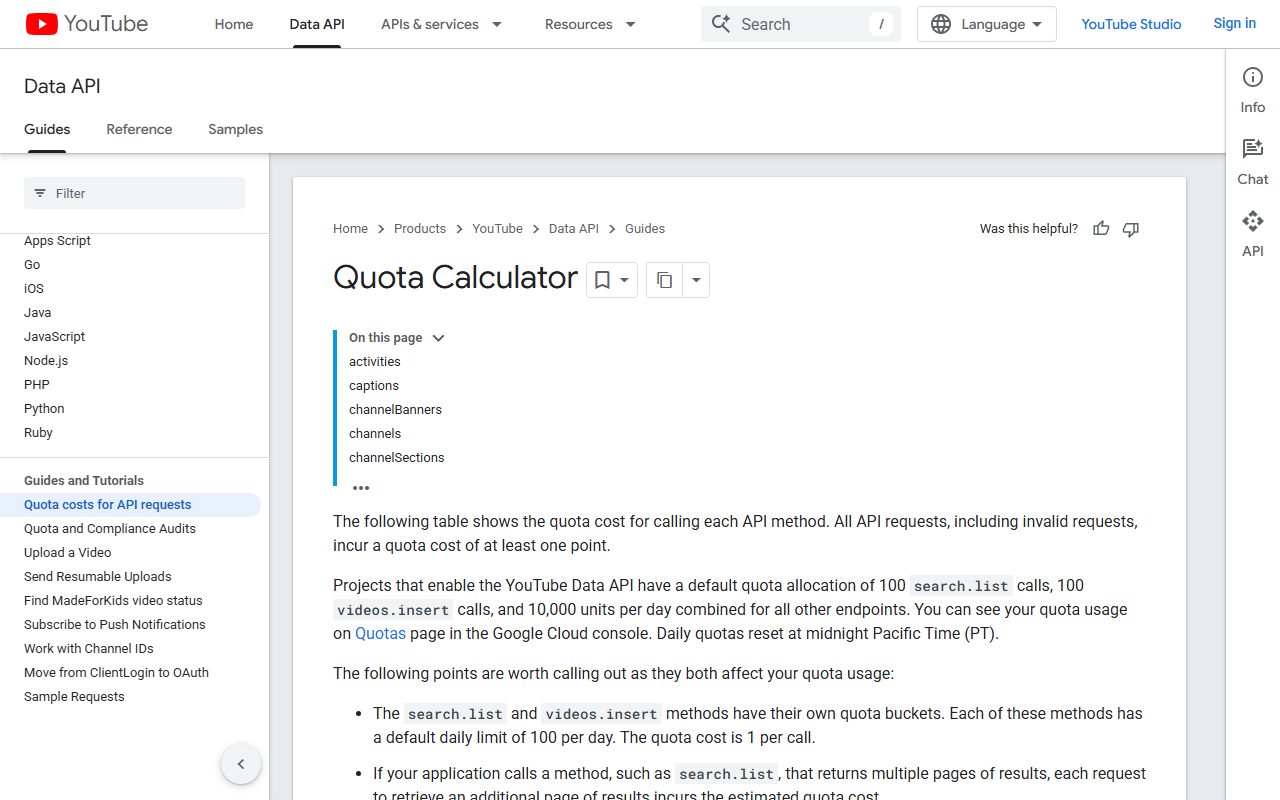
The headline number has changed shape. YouTube states that projects have a default quota allocation of 100 search.list calls, 100 videos.insert calls, and 10,000 units per day combined for all other endpoints.
That same sentence appears on two separate YouTube pages, the quota cost reference and the Getting started guide. The two confirm each other, which is why we print the figure.
The cost per call for those two methods is now 1 unit, not a large fixed charge. YouTube writes that each of the two has its own bucket with a default daily limit of 100 per day.
For a scheduler that means uploads are counted in posts, not in units. A hundred Shorts a day per connected Google Cloud project is the published ceiling before an extension request.
Everything else still draws on the 10,000-unit pool. YouTube's own summary of the rules is short, and the per-method table backs it up.
- A read operation that lists channels, videos or playlists usually costs 1 unit.
- A write operation that creates, updates or deletes a resource usually costs 50 units.
- videos.update, videos.rate, thumbnails.set and playlistItems.insert are each 50 units.
- captions.insert costs 400 units and captions.update costs 450, the most expensive rows in the table.
- liveChatBans and liveChatModerators cost 200 units per insert or delete.
- All requests, including invalid ones, incur a cost of at least one point.
The caption rows matter more than they look. A tool that uploads a Short and then attaches a caption track spends 400 units on the caption against 1 on the video itself.
Paging is charged too. YouTube states that each request to retrieve an additional page of results incurs the estimated quota cost, so a long analytics pull is not one call.
If you reach the limit, YouTube points to a quota extension form rather than a paid tier. There is no published price for more quota.
Pinterest meters trial apps by the day and production apps by the minute
Pinterest publishes a universal ceiling and a category table, and the two use different units. The page states Trial access gets 1,000 requests per day for all API requests.
For production apps the same section states Standard access gets 100 requests per second per user per app for all API requests.
The category table immediately below is headed in requests per minute per user per app for Standard access. So the page carries both a per-second and a per-minute framing for the same tier.
We print both as read on November 3, 2026 rather than pick one. The practical ceiling is the category limit, because every endpoint belongs to a category.
- org_write, which creates, edits or deletes boards, board sections or Pins: 300 per day on Trial, 100 per minute on Standard.
- org_read, which fetches user accounts, boards, board sections or Pins: 1,000 on Trial, 1,000 on Standard.
- org_analytics, which fetches account information and top Pins: 1,000 on Trial, 60 on Standard.
- trends_read, which fetches trending keyword information: 1,000 on Trial, 60 on Standard.
- ads_write: 300 on Trial, 400 on Standard. ads_read: 1,000 on Trial, 1,000 on Standard.
- Pinterest adds that all rate limits are subject to change without notice.
Note the direction of travel on analytics. Moving from Trial to Standard raises the Pin creation ceiling but drops org_analytics and trends_read from 1,000 a day to 60 a minute.
That is not a cut in practice, since 60 a minute is far more per day. It does mean a burst of report pulls can hit a wall that a daily figure would not predict.
Pins created on Trial access are invisible to everyone else
This is the trap worth knowing before you wire anything up. Pinterest's access tiers page states that all Pins and Boards created with Trial access are only visible to their creator as Sandbox entities.
The tier comparison table repeats it. Creating boards and Creating Pins both read "Yes (visible only to creator)" under Trial access and plain "Yes" under Standard.
So a scheduler integration can report a successful publish and leave nothing on the public profile. The post did not fail, which is a different problem from the one in what a social scheduler does when a post fails.
Pinterest also flags a newer error for recent apps. Apps registered on or after September 14, 2026 may receive HTTP 403 PINNER_DATA_ACCESS_DENIED when requesting a board or Pin for non-business users.
Upgrading tiers is a review, not a purchase. Pinterest states Standard upgrade requests are reviewed regularly and that the app must already be approved for Trial access and comply with the Developer Guidelines.
How to read these limits against a plan page
Neither ceiling appears on a scheduler's pricing page, because neither belongs to the scheduler. Your plan buys queue slots; the API decides whether the slot can be spent.
That gap is the reason a plan allowance and a network allowance need reading separately, as set out in how many scheduled posts each plan allows and what a daily posting limit means.
The same split appears on the other networks. Instagram and TikTok API limits for schedulers and LinkedIn and X API limits for schedulers cover their published figures.
If you are calling these APIs through an automation platform rather than a scheduler, the billing meter is a third layer again. Zapier tasks vs Make credits vs n8n executions sets out how each one counts.
- Ask a vendor whether its Pinterest app holds Standard access, not just whether Pinterest is supported.
- For YouTube, ask how many Shorts a day the integration can publish per connected project.
- Treat captions as a separate budget line. On YouTube they cost 400 units to insert.
- Expect analytics pulls to be the thing that trips a limit, not publishing.
- Pinterest limits are published as subject to change without notice. Re-read before a seasonal push.
- Both platforms meter per app, so an agency sharing one tool shares the ceiling.
Self-hosting an automation layer moves the quota problem but does not remove it. n8n Cloud vs self-hosted pricing and license covers that trade, and what counts as a channel in social tools covers how the connection itself is billed.
Frequently asked questions
How many YouTube videos can a scheduler upload per day?
YouTube's documentation read November 3, 2026 gives videos.insert its own bucket with a default daily limit of 100 calls, at 1 unit per call. More requires the quota extension form, which has no published price.
Does uploading a video still cost 1,600 quota units?
Not on the page as read November 3, 2026. The quota table lists videos.insert as 100 quota per day with each call costing 1 quota, and the Getting started guide states a video upload costs 1 unit.
What is Pinterest's limit on creating Pins?
Pin creation falls in org_write, listed at 300 requests per day per app on Trial access and 100 requests per minute per user per app on Standard access, read November 3, 2026.
Why can nobody see the Pins my tool published?
Check the app's access tier. Pinterest states that Pins and Boards created with Trial access are visible only to their creator as Sandbox entities, so a successful publish can still show nothing publicly.
Does Pinterest limit requests per second or per minute?
Its page says both. The universal line gives Standard access 100 requests per second per user per app, while the category table is headed requests per minute. Both were read November 3, 2026.
Can I pay Pinterest or YouTube for a higher limit?
Neither publishes a price. YouTube points to a quota extension form; Pinterest says to contact Support for a rate limit change and reviews Standard access upgrades regularly.
Bottom line
For YouTube, count Shorts rather than units. A hundred uploads a day per project is the published default, and captions are the expensive call at 400 units each.
For Pinterest, the access tier matters more than the rate limit. Trial access publishes Pins that only the creator can see, which no plan page will warn you about.
All figures come from the platforms' own developer documentation as read on November 3, 2026. Pinterest states its limits can change without notice, so re-read before you build a volume plan on them.
Sources
- YouTube Data API: Quota costs for API requests (default allocation of 100 search.list, 100 videos.insert and 10,000 units a day, per-method cost table) (checked Nov 3, 2026)
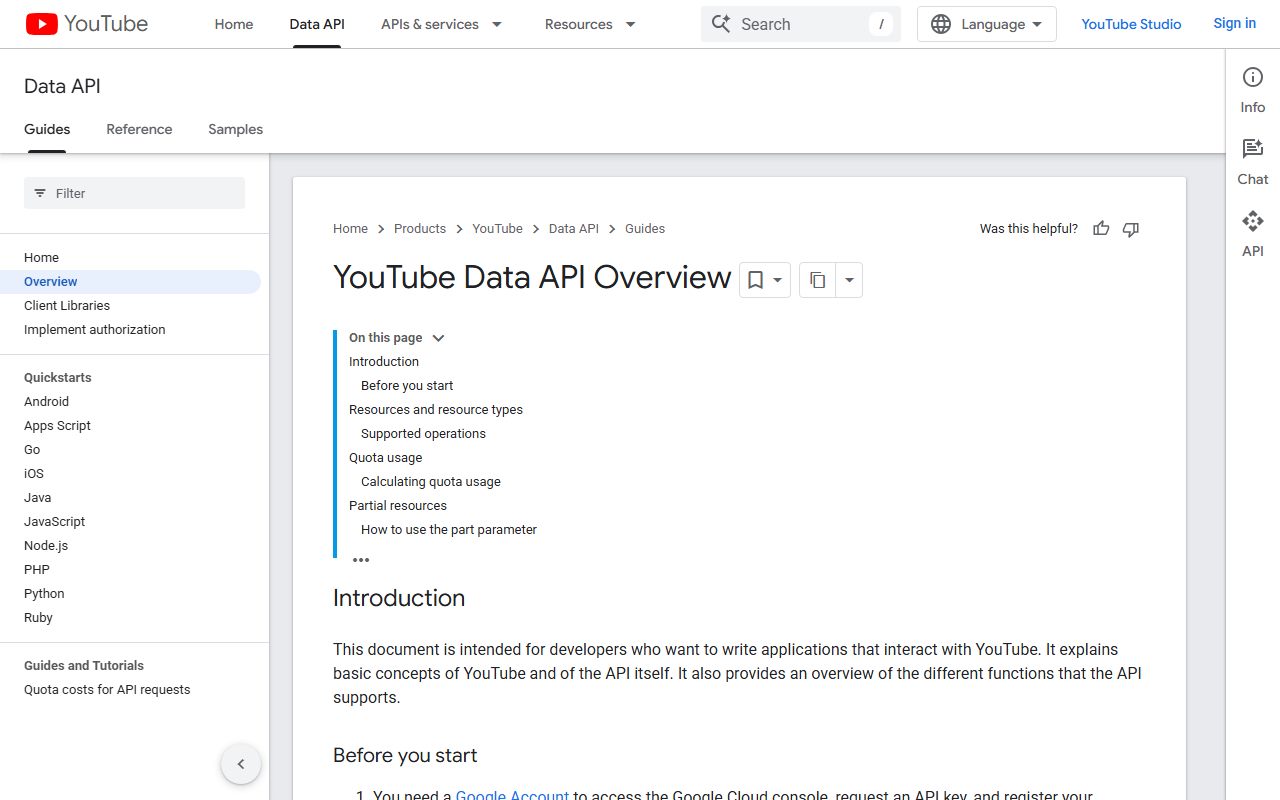
- YouTube Data API: Getting started (quota usage rules, read 1 unit, write 50 units, search 1 unit, upload 1 unit, quota extension form) (checked Nov 3, 2026)
- Pinterest Developers: Rate limits (universal Trial and Standard ceilings, per-category table including org_write, org_read, org_analytics and trends_read) (checked Nov 3, 2026)
- Pinterest Developers: Access tiers (Trial vs Standard comparison, Sandbox visibility of Pins and Boards, PINNER_DATA_ACCESS_DENIED notice for apps registered on or after September 14, 2026) (checked Nov 3, 2026)